
Orofacial Myofunctional Therapy
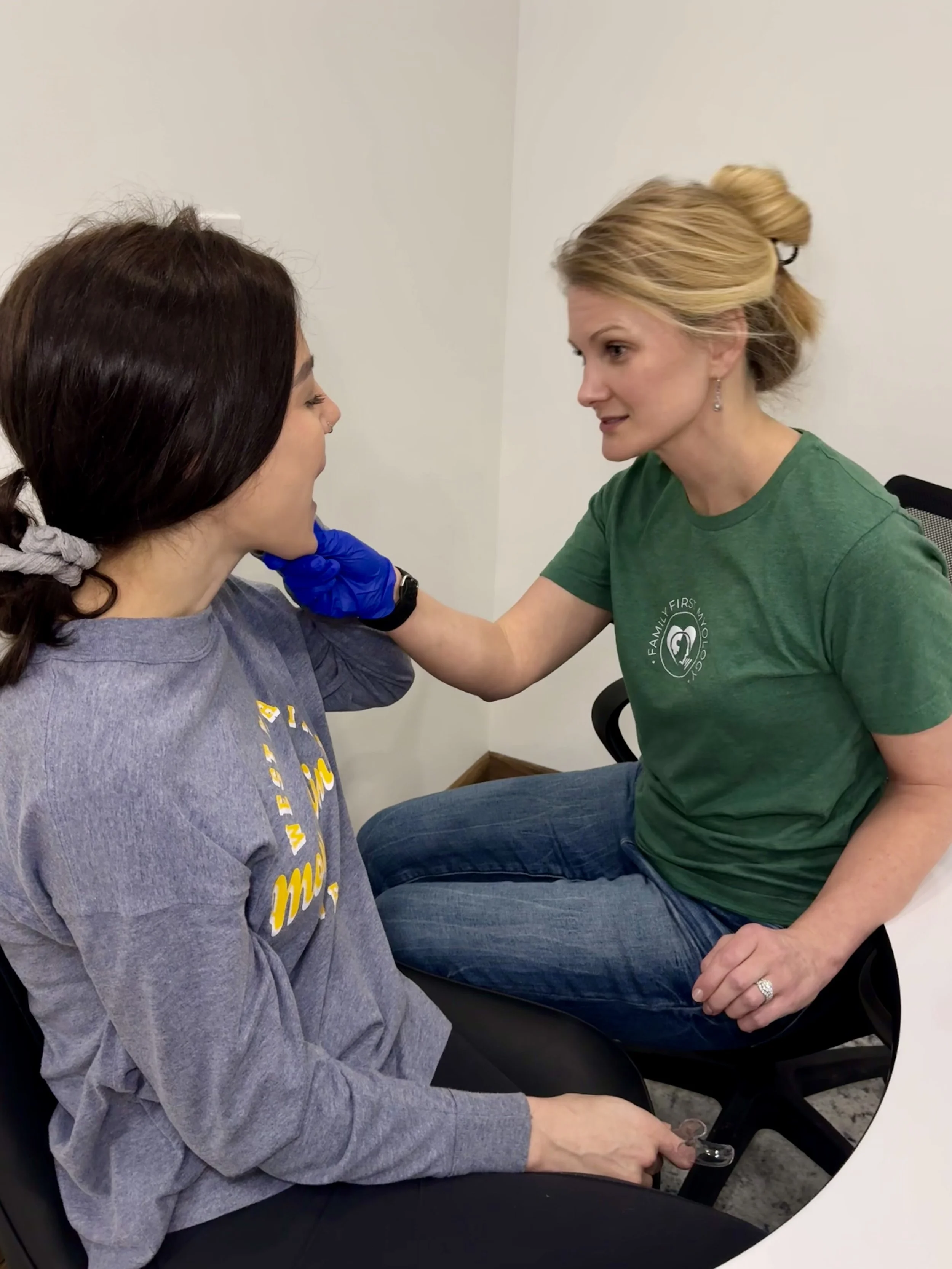
Orofacial Myofunctional Therapy (OMT) is a therapy approach that focuses on the assessment and treatment of oral and facial muscle patterns that support functional activities such as breathing, chewing, swallowing, and speech.
Myofunctional therapy addresses muscle strength, coordination, resting postures, and movement patterns of the lips, tongue, jaw, and face. These muscle patterns play an important role in airway support, feeding mechanics, and speech production.
Myofunctional therapy works to optimize oral-facial muscle function and balance, which may support overall efficiency and stability of the orofacial system. Therapy is individualized and often provided in collaboration with other healthcare providers when appropriate.
Myofunctional therapy is appropriate for both children and adults.
Symptoms That May Indicate the Need for a Myofunctional Evaluation
Oral & Facial Muscle Patterns
Open-mouth resting posture
Low or forward tongue resting posture
Lip incompetence (difficulty maintaining closed lips at rest)
Excessive facial or chin muscle use during swallowing
Jaw instability or limited jaw control during functional tasks
Chronic congestion
A myofunctional evaluation may be appropriate for individuals who demonstrate oral-facial muscle patterns or functional challenges, including:
Speech & Sound Production
Speech sound distortions related to tongue placement
Reduced clarity due to oral-motor coordination challenges
Difficulty maintaining appropriate tongue placement for speech
Lack of progress with traditional speech therapy approaches
Postural & Tension Patterns
Excessive head, neck, or facial tension during functional tasks
Forward head posture associated with oral-facial muscle use
Signs of fatigue with speaking, chewing, or swallowing
Feeding & Swallowing-Related Patterns
Tongue thrust or atypical swallow patterns
Difficulty chewing or managing textured foods
Messy eating or inefficient bolus control
Prolonged feeding times
Breathing & Airway-Related Observations (Function-based)
Preference for mouth breathing
Noisy breathing/ snoring during rest or sleep
Difficulty maintaining nasal breathing during quiet activities
Hyperactivity / difficulty concentrating
Insurance
We operate as an out-of-network provider, which means we do not bill insurance companies directly. However, we are happy to provide you with a detailed superbill (receipt) after each session that you can submit to your insurance company for possible out-of-network reimbursement.